GHK-Cu: the science behind copper peptides for skin and hair research
GHK-Cu is a naturally occurring copper peptide with a remarkable range of biological activities — from collagen synthesis and wound repair to antioxidant defence and hair follicle activation. Here's what the research literature shows.
Dr. Elena Vasquez
Director of Metabolic Research
GHK-Cu (glycyl-L-histidyl-L-lysine copper complex) was first identified in human plasma in 1973 by Loren Pickart, who observed that a fraction of adult plasma caused fetal liver tissue to synthesise proteins at a rate characteristic of fetal — not adult — tissue. The active molecule turned out to be a small tripeptide with a high affinity for copper ions. Over the following decades, GHK-Cu has been shown to have a remarkably broad range of biological activities that extend well beyond initial observations about tissue repair.
Structure and copper binding
The GHK tripeptide (Gly-His-Lys) forms a stable complex with copper(II) ions through coordination bonds involving the histidine imidazole nitrogen, the deprotonated glycine nitrogen, and the lysine amino group. This copper complex is the biologically active form. Copper is an essential cofactor for numerous enzymes involved in connective tissue synthesis, antioxidant defence, and energy metabolism — and GHK-Cu appears to act partly as a copper delivery vehicle to tissues where copper-dependent enzyme activity is rate-limiting.
GHK-Cu circulates in human plasma at concentrations of approximately 200 ng/mL in young adults, declining to around 80 ng/mL in older adults. This age-related decline has made GHK-Cu an object of significant interest in longevity and skin aging research.
Mechanisms of action
Collagen and extracellular matrix remodelling
GHK-Cu's most well-characterised activity is its stimulation of collagen synthesis and extracellular matrix remodelling. It increases production of collagen types I, III, and IV in dermal fibroblasts, while simultaneously upregulating collagenase (MMP-1) to facilitate turnover of damaged or cross-linked collagen fibres. This dual action — stimulating new synthesis while clearing old matrix — is distinct from the mechanism of simple collagen boosting approaches and more closely resembles the coordinated remodelling that characterises genuine tissue regeneration.
Beyond collagen, GHK-Cu increases production of elastin, fibronectin, and proteoglycans (dermatan sulphate, chondroitin sulphate), contributing to the full restoration of dermal architecture rather than any single component.
Wound healing and tissue repair
GHK-Cu accelerates wound closure through multiple mechanisms: increased keratinocyte and fibroblast migration (similar to TB-500), promotion of angiogenesis via VEGF upregulation, stimulation of nerve outgrowth, and anti-inflammatory modulation. In wound healing models, topical GHK-Cu application consistently reduces closure time and improves scar quality compared to untreated controls.
Its combination with BPC-157 in tissue repair stacks is supported by mechanistic complementarity — BPC-157 targets NO system and growth factor pathways while GHK-Cu addresses matrix synthesis and copper-dependent enzyme activity. Together they provide broader coverage of the repair cascade.
Antioxidant and cytoprotective effects
GHK-Cu activates the Nrf2-antioxidant response element pathway, upregulating a suite of antioxidant enzymes including superoxide dismutase, catalase, and glutathione peroxidase. In cells exposed to oxidative stress models (hydrogen peroxide, UVB radiation, reactive oxygen species), GHK-Cu pre-treatment significantly reduces cellular damage markers and apoptosis rates.
This cytoprotective activity is particularly relevant in skin aging research, where cumulative oxidative damage to dermal DNA, proteins, and lipids drives the progressive loss of structural integrity.
Hair follicle activation
GHK-Cu stimulates hair follicle enlargement, prolongs the anagen (active growth) phase, and increases follicle density in both in-vitro culture models and in-vivo rodent studies. The mechanisms include growth factor upregulation (KGF, HGF, VEGF), increased dermal papilla cell proliferation, and improved scalp vascularisation.
It is frequently paired with AHK-Cu (the copper complex of the tripeptide Ala-His-Lys) for hair research. AHK-Cu shows higher follicle-stimulating potency in some models but a narrower overall biological profile — making the combination mechanistically complementary.
Gender-relevant research notes
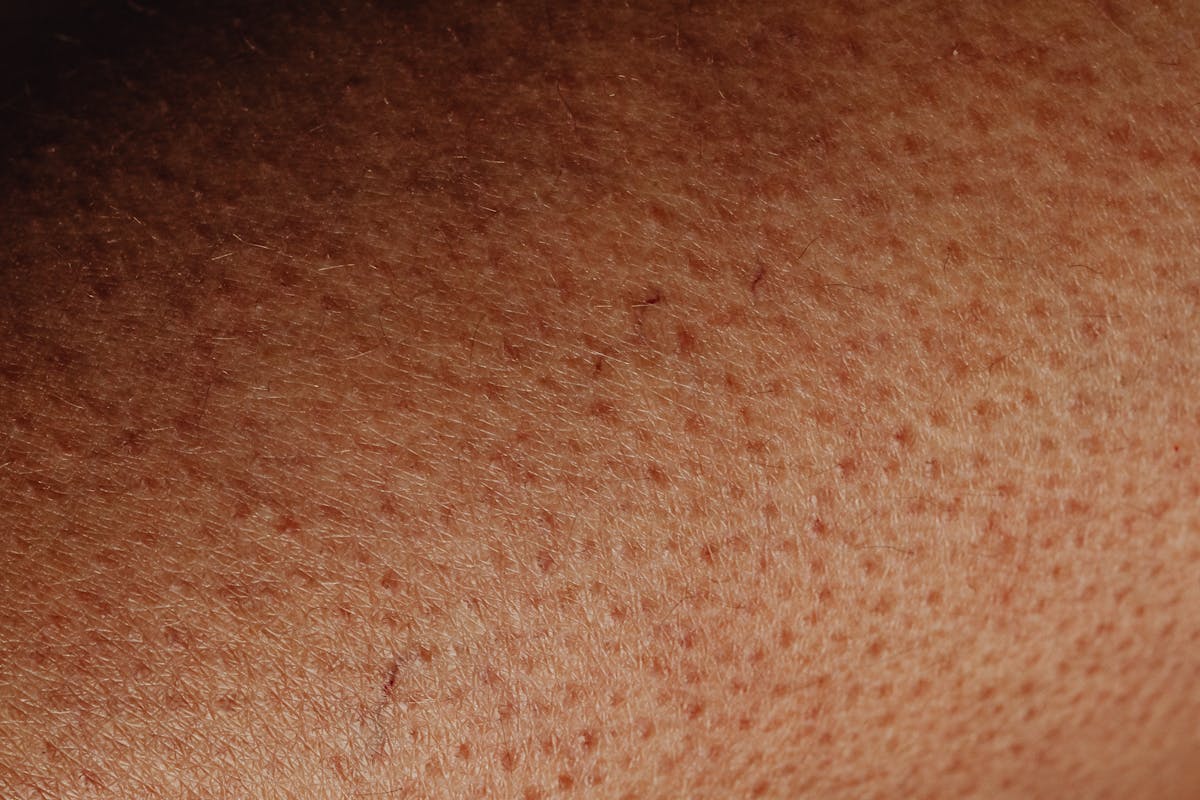
Skin collagen density and dermal thickness differ significantly between male and female subjects. Males typically have 15–20% higher collagen density and thicker dermis, driven in part by androgen-mediated effects on fibroblast activity. This means GHK-Cu's collagen-stimulating effects manifest on a different baseline — female skin shows more pronounced relative increases in collagen markers, while male subjects show greater absolute collagen deposition per dose in some models.
For hair research, sex hormone interactions are critical. Androgen sensitivity of hair follicles varies dramatically by follicle location and biological sex. GHK-Cu appears to act through mechanisms partially independent of androgen signalling, which may make it particularly useful for studying non-androgenic pathways of hair loss and regrowth.
Practical research considerations
GHK-Cu is studied both topically and systemically. For skin and wound healing research, topical application at 0.05–2% concentration in gel or cream vehicles is standard. For systemic endpoints, subcutaneous injection models use 1–10 mg/kg doses in rodents. The peptide-copper complex is relatively stable at physiological pH but sensitive to metal chelators — research media and buffers should be free of EDTA or similar compounds.
GHK-Cu's ability to simultaneously stimulate new matrix synthesis and facilitate turnover of damaged matrix — rather than simply adding more of any single component — makes it one of the most genuinely regenerative peptides in the research repertoire.
References
- Pickart, L. et al. (2012). The human tri-peptide GHK and tissue remodeling. Journal of Biomaterials Science, 23(1-4), 41–52.
- Gorouhi, F. & Maibach, H.I. (2009). Role of topical peptides in preventing or treating aged skin. International Journal of Cosmetic Science, 31(5), 327–345.
- Park, J.R. et al. (2016). Human hair growth enhancement in vitro by green tea epigallocatechin-3-gallate (EGCG). Phytomedicine, 23(5), 533–537.