
Inside the European Peptide & Analytics Gateway Summit 2026
Myotrope joined leading researchers, manufacturers, and analytical chemists at EPAG Summit 2026 in Amsterdam — a three-day event redefining how the peptide research community shares quality data and builds scientific trust.
Dr. Marcus Chen
Senior Research Scientist
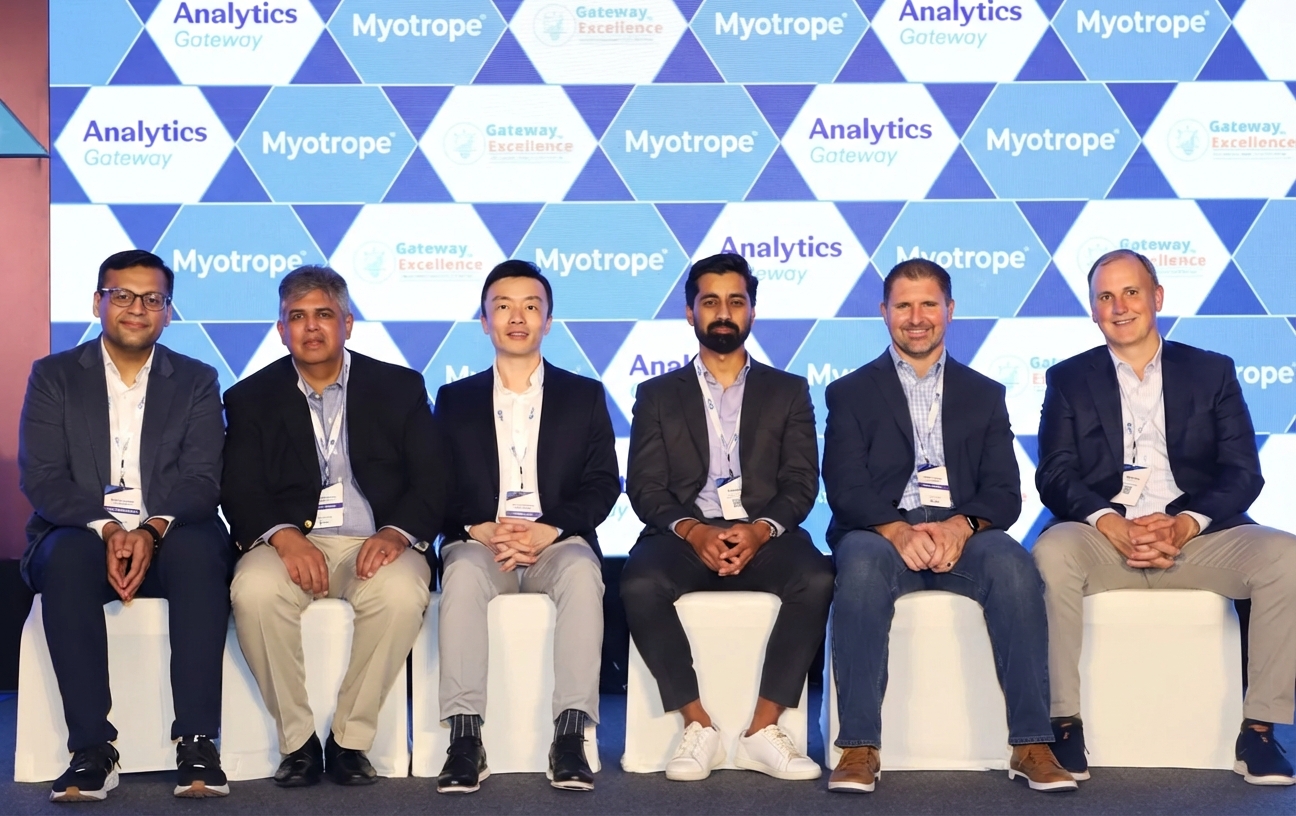
Earlier this month, the Myotrope team travelled to Amsterdam for the European Peptide & Analytics Gateway Summit — three days of keynotes, roundtables, and hands-on workshops bringing together peptide manufacturers, analytical chemists, and institutional researchers from across Europe and beyond. It was one of the most energising events our team has attended, and we came back with both new partnerships and a sharper view of where the industry is heading.
What Is the Analytics Gateway?
If you haven't encountered the term yet, the Analytics Gateway is an emerging open-standard initiative backed by a coalition of European research institutions and peptide suppliers. Its goal is straightforward but ambitious: create a shared, machine-readable format for peptide analytical data — HPLC chromatograms, mass spectra, Certificate of Analysis documents — so that quality data can travel alongside compounds across the supply chain rather than sitting in siloed PDF files.
For researchers, this means being able to verify the purity profile of a compound directly within their laboratory information management system (LIMS) before it ever reaches the bench. For manufacturers like Myotrope, it means an opportunity to demonstrate quality in a format that institutions can audit, compare, and trust at scale.
Myotrope's Participation
Our team joined a panel discussion on Day 1 focused on quality transparency in commercial peptide supply. The conversation centred on a question that we hear from researchers regularly: how do you know that the number on the COA reflects reality?
We walked through our end-to-end quality process — from GMP-certified synthesis through independent third-party HPLC and LC-MS verification — and discussed how adopting the Analytics Gateway format would allow us to publish structured, queryable purity data rather than static documents. The response from the room was encouraging. Researchers want this. Labs want this. The infrastructure is now catching up.
Key Session: Standardising Purity Reporting
One of the conference's standout workshops tackled a persistent inconsistency in the industry: different suppliers report purity using different methodologies, making comparisons almost meaningless. A compound listed at 98% purity by area normalisation can look very different from one reported at 98% by peak height — and neither figure tells you anything about the detection wavelength, column chemistry, or whether achiral impurities were resolved at all.
The working group proposed a minimum reporting standard that includes:
- Column chemistry and pore size used for purity determination
- Mobile phase composition and gradient parameters
- Detection wavelength and UV response assumptions
- Whether LC-MS confirmation of molecular weight was performed
- Water content (Karl Fischer) for accurate mass-based dosing
Myotrope already includes the majority of these parameters in our COA documents. We see the formalisation of this standard as a rising tide that benefits the entire research community.
Networking: Building the Research Community
Beyond the formal programme, some of the most valuable conversations happened between sessions. We met with researchers from university pharmacology departments, contract research organisations, and independent labs — all wrestling with the same core challenge: sourcing compounds they can trust without spending weeks on vendor qualification.
Several researchers expressed interest in Myotrope's reseller network model, particularly the tiered verification system that ensures cold-chain compliance at every distribution point. We also had productive early conversations with two Analytics Gateway working group members about integrating our COA data into the pilot platform launching later this year.
Trends We're Watching
Across the three days, a few themes emerged consistently:
- Regulatory attention is increasing. Several speakers noted that national medicines agencies are beginning to pay closer attention to the research peptide market, particularly around labelling, purity claims, and import documentation. Manufacturers with robust QC infrastructure are well-positioned; those relying on vague specifications are not.
- Demand for injectable formats is rising. Peptide injection pens — which combine pre-measured dosing with improved cold-chain stability — generated significant interest. Researchers appreciate the elimination of reconstitution variability from experimental protocols.
- GLP-1 research remains dominant. Semaglutide, Tirzepatide, and Retatrutide continue to drive the largest volume of research inquiries, but there was notable growth in interest around cognitive peptides (Semax, Selank, PE-22-28) and longevity compounds (FOXO4-DRI, Epithalon, MOTS-C).
Looking Ahead
The European Peptide & Analytics Gateway Summit reinforced something we already believed: the research community is not short of curiosity or ambition. What it needs is infrastructure — reliable supply, transparent data, and suppliers willing to be held to a higher standard.
Myotrope will be actively participating in the Analytics Gateway pilot programme when it launches, and we're committed to publishing our structured analytical data in the open standard format as it matures. If you're a researcher interested in how this might affect your lab's procurement workflow, we'd love to hear from you.
Scientific progress is a collective endeavour. The more transparently quality data flows through the research supply chain, the faster meaningful discoveries can be made.