Optimizing HPLC Protocols for High-Purity Peptide Synthesis
Technical review of reverse-phase chromatography techniques used to achieve purity levels exceeding 99% in large-scale peptide production.
Dr. Sarah Lindqvist
Head of Analytical Chemistry
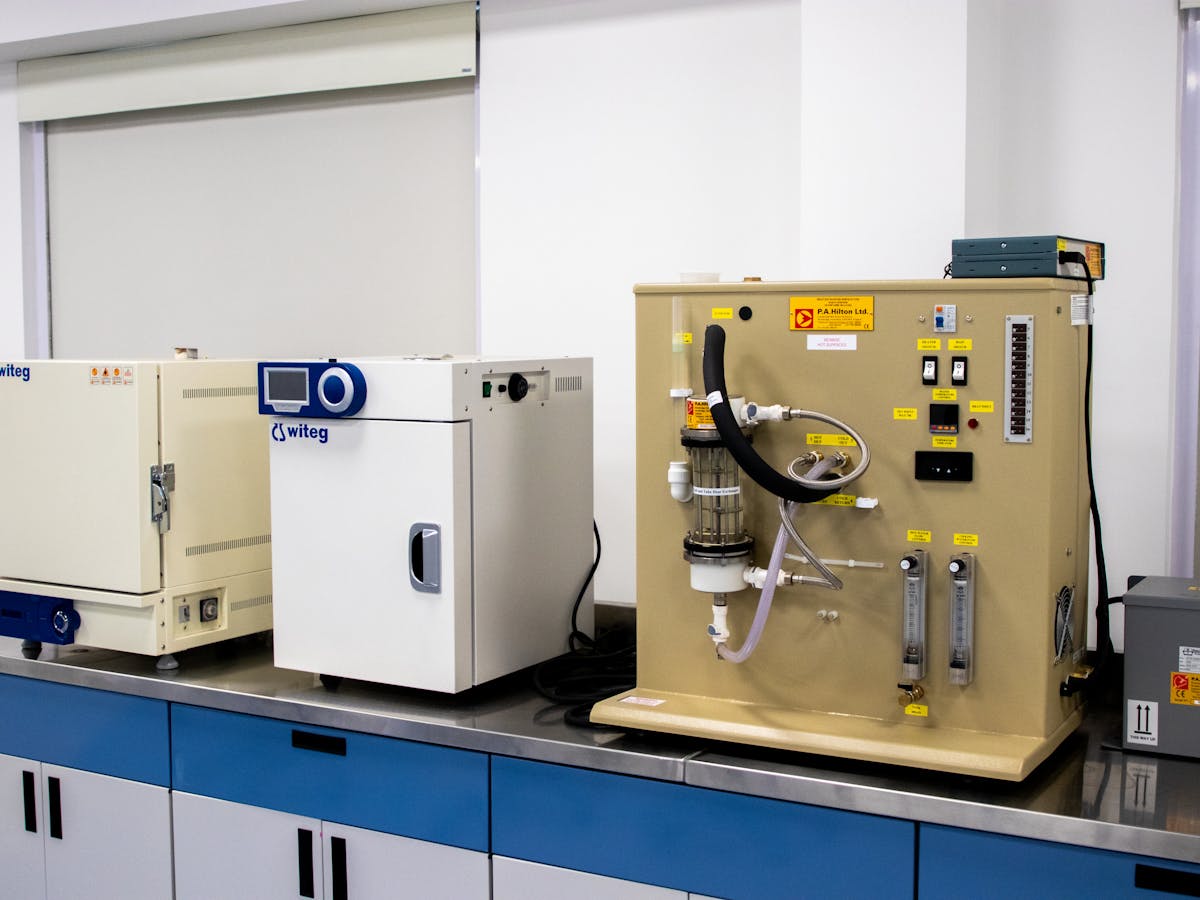
High-Performance Liquid Chromatography (HPLC) remains the gold standard for peptide purification and analysis. Achieving consistent purity levels above 99% at production scale requires careful optimization of multiple parameters — from column selection to mobile phase composition and gradient design.
Fundamentals of Reverse-Phase HPLC for Peptides
Reverse-phase HPLC (RP-HPLC) separates peptides based on hydrophobic interactions between the analyte and a non-polar stationary phase. The technique exploits differences in hydrophobicity among the target peptide and its impurities — truncated sequences, deletion products, and modification variants.
For research-grade peptide purification, C18 columns remain the most widely used stationary phase, though C4 and C8 phases offer advantages for larger peptides (>30 amino acids) where C18 retention can be excessively strong.
Critical Parameters for Optimization
1. Column Selection
Column chemistry significantly impacts resolution. Key considerations include:
- Particle size: Sub-2 micron particles (UHPLC) provide superior resolution but require higher operating pressures. For preparative work, 5-10 micron particles offer a practical balance between resolution and throughput.
- Pore size: 100-120 angstrom pores are optimal for peptides under 5 kDa. Larger peptides benefit from 300 angstrom pore columns to reduce restricted diffusion effects.
- Carbon load: Higher carbon loads increase retention and selectivity but may cause irreversible adsorption of hydrophobic peptides.
2. Mobile Phase Optimization
The standard mobile phase system for peptide RP-HPLC consists of water/acetonitrile with trifluoroacetic acid (TFA) as an ion-pairing agent. However, several modifications can improve results:
- TFA concentration: Standard 0.1% TFA provides sharp peaks for most peptides. Reducing to 0.05% can improve resolution for closely-eluting impurities at the cost of peak shape.
- Alternative modifiers: Formic acid (0.1%) is preferred when coupling with mass spectrometry detection. Ammonium bicarbonate buffers can be used for basic peptides.
- Temperature control: Column temperatures of 40-60 degrees C reduce mobile phase viscosity and improve mass transfer kinetics, often yielding 20-30% improvement in resolution.
3. Gradient Design
Gradient optimization is perhaps the single most impactful variable in peptide purification. Our recommended approach:
- Begin with a broad scouting gradient (5-95% B over 30 minutes) to identify the elution window
- Narrow the gradient to span 20 percentage points around the target peak
- Use shallow gradients (0.5-1% B per minute) through the critical separation zone
- Implement step gradients for column washing and re-equilibration to maximize throughput
Scale-Up Considerations
Translating analytical HPLC methods to preparative scale introduces additional challenges. Column loading capacity, flow rate scaling, and fraction collection strategy must be carefully managed.
Loading Capacity
Preparative columns can typically handle 10-50 mg of crude peptide per gram of stationary phase, depending on the complexity of the crude mixture. Overloading leads to peak broadening and reduced purity, while underloading wastes time and solvent.
Fraction Collection and Pooling
Automated fraction collection with UV-triggered thresholds is standard practice. We recommend collecting fractions at 0.1 AU intervals across the target peak and analyzing each by analytical HPLC before pooling. This approach consistently yields final purities exceeding 99%.
Quality Control: Verifying Purity Claims
Purity determination requires orthogonal analytical methods. At Myotrope, our standard quality control protocol includes:
- Analytical RP-HPLC: Primary purity assessment using a different column selectivity than the preparative method
- LC-MS: Mass confirmation and identification of any remaining impurities
- Amino acid analysis: Compositional verification for sequence-confirmed identity
- Water content (Karl Fischer): Ensures accurate weight-based dosing
Purity is not a single number — it is a multi-dimensional assessment that requires orthogonal analytical methods to verify. Every Certificate of Analysis should reflect this complexity.
References
- Snyder, L.R. et al. (2010). Introduction to Modern Liquid Chromatography. 3rd Edition, Wiley.
- Mant, C.T. & Hodges, R.S. (2002). HPLC of Peptides and Proteins: Methods and Protocols. Methods in Molecular Biology, Vol. 251.
- Rathore, A.S. & Velayudhan, A. (2003). Scale-up and Optimization in Preparative Chromatography. Marcel Dekker.